Cloud Tiering: Managing Data Based on Usage and Storage Needs
A structured approach to handling data as access patterns and storage requirements change.
As organizations move more applications and workloads into digital environments, the amount of information they need to store continues to increase. Business documents, databases, backups, application files, media, logs, and historical records can all contribute to a rapidly expanding storage footprint. The challenge is not only finding enough space for this information but also managing it according to how it is actually used. Cloud tiering provides a practical framework for doing this.
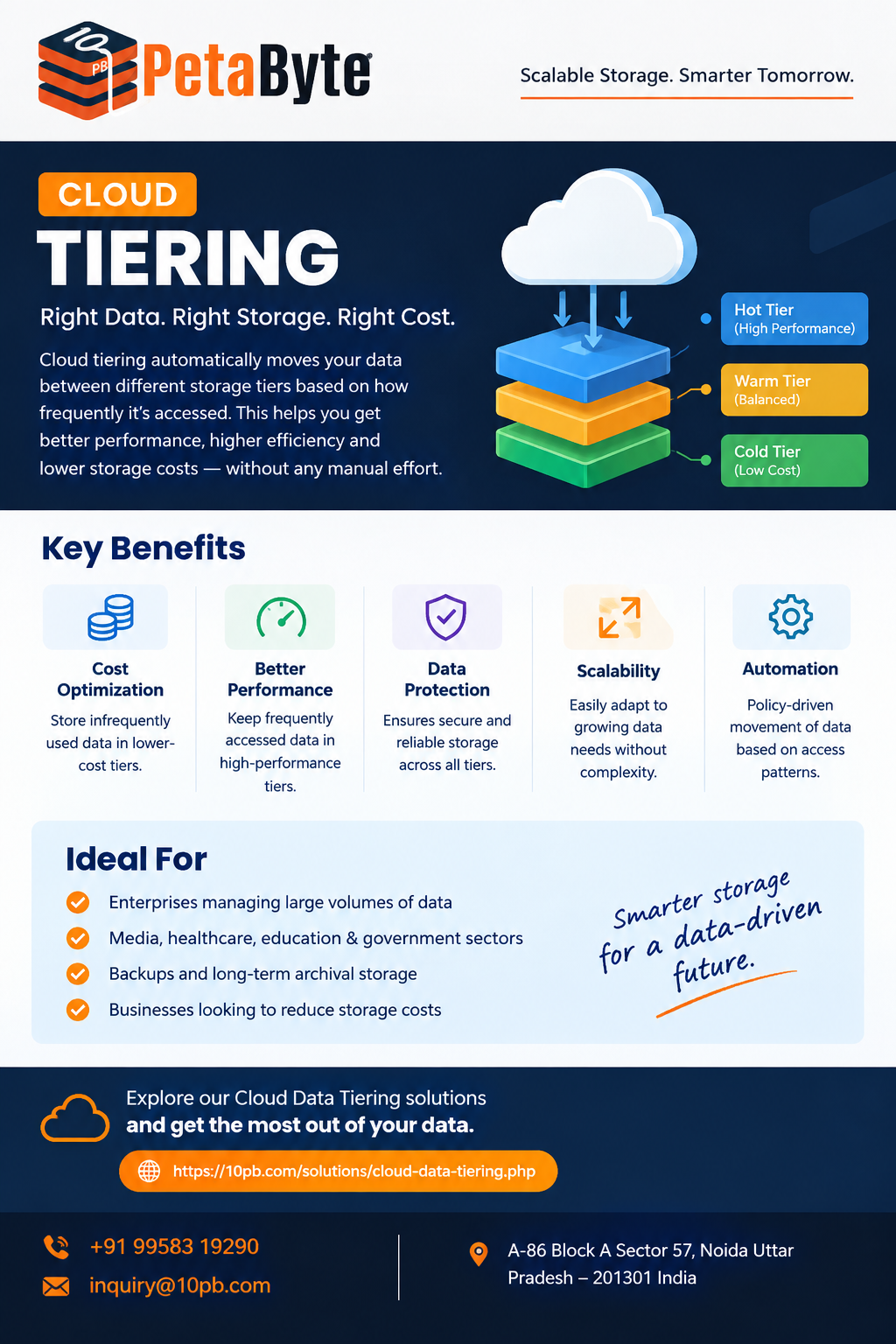
Cloud tiering is a data storage approach that places information across different storage tiers according to factors such as access frequency, performance requirements, data age, and retention needs. Rather than treating every dataset in exactly the same way, organizations can identify which information requires fast and frequent access and which information can be maintained in another suitable storage environment.
Different Data Needs Different Storage
A typical business can have many types of data operating at the same time. Current customer records may be accessed throughout the day, while an older project folder may only be opened once or twice a year. Previous backups may need to be retained for a specific period, while analytical datasets may experience changing access patterns depending on business activity.
Although all of these datasets can be important, they do not necessarily require identical storage characteristics. Cloud tiering allows organizations to consider these differences when designing their storage architecture.
The first step is generally understanding the data itself. Access frequency, age, workload type, application dependencies, retention requirements, and business importance can all help determine the appropriate storage placement.
Managing Data Through Its Lifecycle
Data usually has a lifecycle. Information may initially be highly active when it is being created or processed. Later, access may decline while the information still needs to be retained. Eventually, it may become primarily archival.
Cloud tiering can support this lifecycle by providing a framework for moving data between appropriate storage environments as its requirements change. This can help businesses avoid treating long-term information in exactly the same way as their most active workloads.
For example, an organization may keep frequently accessed operational files in a performance-oriented environment while older records are maintained in another tier designed around less frequent access. The exact policy depends on the organization's requirements and the capabilities of its storage infrastructure.
Improving Storage Organization
A structured tiering model can make a growing storage environment easier to understand. Without defined policies, organizations may accumulate data across storage resources without a clear distinction between active and inactive information.
By establishing rules for data placement, storage teams can create a more consistent architecture. These rules can be based on data age, access patterns, file characteristics, application requirements, or retention policies.
This is especially useful when data volumes become large enough that manual storage decisions are difficult to maintain.
Considering Performance and Accessibility
Performance is an important part of tier selection. Applications with demanding workloads may require rapid access to their data, while information that is rarely accessed may have different performance expectations.
However, lower access frequency does not mean that information should become inaccessible. Historical records and archived files can remain valuable even when they are not part of everyday operations. A suitable tiering strategy should therefore consider both accessibility and the expected frequency of retrieval.
Security Across Storage Tiers
Data protection needs to remain consistent when information moves between environments. Organizations should consider authentication, authorization, encryption, monitoring, backup procedures, and other security controls as part of their tiering strategy.
Sensitive information may also require additional restrictions. Before implementing automated movement policies, businesses should identify data categories that have specific security or compliance requirements.
Preparing for Continued Data Growth
Storage requirements can change quickly as businesses introduce new applications, collect more customer information, expand their digital operations, or increase their use of analytics and media.
Cloud tiering can provide a more flexible way to respond to this growth. Instead of allocating the same storage characteristics to every dataset, organizations can establish policies that reflect the actual requirements of different workloads.
This can also help with capacity planning because storage teams can evaluate how much information belongs to each tier and how those proportions are changing over time.
Building a Broader Data Management Strategy
Cloud tiering is one part of a wider data management framework. Businesses may also need solutions for backup, archiving, migration, disaster recovery, data protection, and long-term retention.
Combining these practices can provide a more complete view of the data lifecycle. Rather than making storage decisions only when capacity becomes a problem, organizations can establish policies in advance for how information should be managed as it changes.
10PB provides cloud storage and data management solutions for organizations handling growing volumes of digital information. Its cloud data tiering solution focuses on organizing data across storage tiers according to factors such as usage and access requirements.
There is no single tiering model that works for every organization. Storage architecture should reflect the company's applications, data characteristics, security requirements, retention policies, and expected growth.
Ultimately, cloud tiering provides a way to make storage decisions based on how data behaves. By distinguishing active information from less frequently accessed and long-term data, organizations can create a more organized storage environment and establish clearer policies for managing information throughout its lifecycle.