Best Cloud Server Hosting for Scalable Online Projects
Flexible cloud infrastructure designed to support changing workloads.
As websites and applications grow, their infrastructure requirements can change quickly. More visitors, larger databases, new features, and increased application activity can place additional demands on a hosting environment. For this reason, choosing suitable infrastructure is an important part of planning a reliable online service.
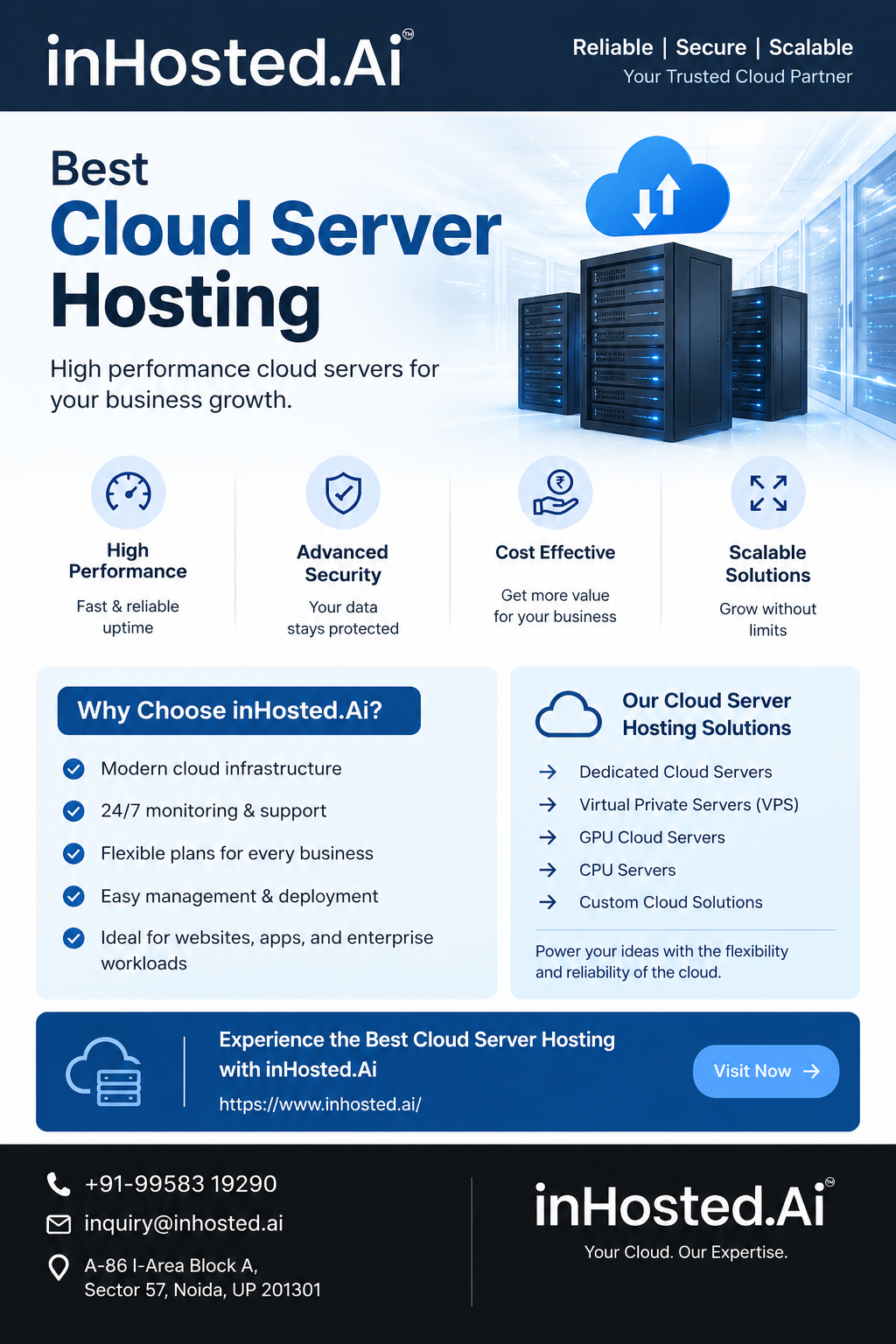
The search for Best cloud server hosting often begins when businesses and developers need an environment that can provide computing resources while allowing room for future growth.
Cloud server hosting uses virtualized infrastructure to provide resources for websites, applications, databases, APIs, development environments, and other digital workloads. Its flexible nature makes it suitable for projects with requirements that may change over time.
Why Infrastructure Flexibility Matters
A website that works comfortably with its current traffic may eventually require additional resources. Growth can come from new customers, marketing campaigns, seasonal activity, expanded services, or increased application usage.
A fixed infrastructure plan may not always accommodate these changes efficiently. Cloud hosting provides a more adaptable approach, allowing organizations to review their resource requirements as their workloads evolve.
This does not mean every project needs extensive resources from the beginning. Instead, the focus should be on selecting an appropriate configuration with a practical path for future adjustments.
Key Areas to Evaluate
When researching Best cloud server hosting, it helps to evaluate the hosting environment from several perspectives.
Computing Capacity
CPU and memory are fundamental server resources. Applications with more demanding processing requirements may need greater computing capacity than simple websites.
Understanding the application's workload helps determine an appropriate configuration.
Storage Requirements
Storage needs vary considerably between projects. A basic website may require limited storage, while a platform managing databases, media, backups, or large business files may require substantially more.
Planning storage around current usage and future growth can prevent avoidable limitations.
Scalability
A cloud environment can be useful when resource requirements are not completely predictable. As workloads increase, organizations can evaluate whether additional resources are required.
Scalability is particularly relevant to businesses that expect their websites or applications to expand.
Reliability
Online services need dependable infrastructure. When evaluating hosting, organizations can examine infrastructure design, monitoring, backup practices, and service-management processes.
Reliability is especially important for websites and applications that support everyday business operations.
Security
Server security requires ongoing attention. Access controls, authentication, software updates, backups, monitoring, and secure configurations should all be part of an infrastructure strategy.
Applications should also be reviewed for their own security requirements.
Cloud Hosting for Developers
Developers can use cloud servers for many stages of the application lifecycle. A cloud environment may support development, testing, staging, and production workloads.
For example, a development team can build an application in an isolated environment and later deploy it to a production server. Flexible infrastructure can make it easier to create configurations appropriate for different stages.
Cloud servers can also host backend services, APIs, databases, and other components required by modern applications.
Supporting Business Websites
Businesses increasingly rely on websites for communication, lead generation, customer support, and online transactions. A suitable hosting environment can provide the infrastructure needed to keep these services operating efficiently.
As business activity increases, hosting requirements may also change. This is where a flexible cloud infrastructure strategy can become useful.
Rather than selecting infrastructure only according to current traffic, businesses can consider expected growth and monitor resource usage over time.
The Role of Performance Optimization
Server capacity is only one element of website and application performance. Efficient code, database optimization, caching, content optimization, and application architecture also influence performance.
A well-configured cloud server provides a suitable foundation for these optimization efforts.
Regular monitoring can further help identify potential bottlenecks. Resource utilization data can show whether a workload is approaching its current capacity or whether optimization may be necessary.
Planning Before Deployment
Before choosing a cloud server, create an overview of the project requirements.
Consider:
Expected website or application traffic
CPU and memory requirements
Storage capacity
Database requirements
Security considerations
Backup requirements
Future growth
Technical management needs
This assessment makes it easier to compare hosting environments according to practical requirements.
Cloud Hosting for Long-Term Growth
Digital infrastructure should evolve alongside the services it supports. A small project can become a much larger platform, and an established business can introduce new applications or services.
Cloud server hosting provides a flexible infrastructure model for handling these changes. However, the appropriate configuration should always be based on actual workload requirements rather than simply selecting the maximum available resources.
For organizations researching Best cloud server hosting, InHosted.ai provides cloud hosting solutions intended for websites, applications, and modern online workloads. Evaluating the available options can help businesses and developers select infrastructure that aligns with their current projects and future plans.