Cloud Storage Device for Smarter CCTV Data Management
Making surveillance footage easier to store, protect, and manage
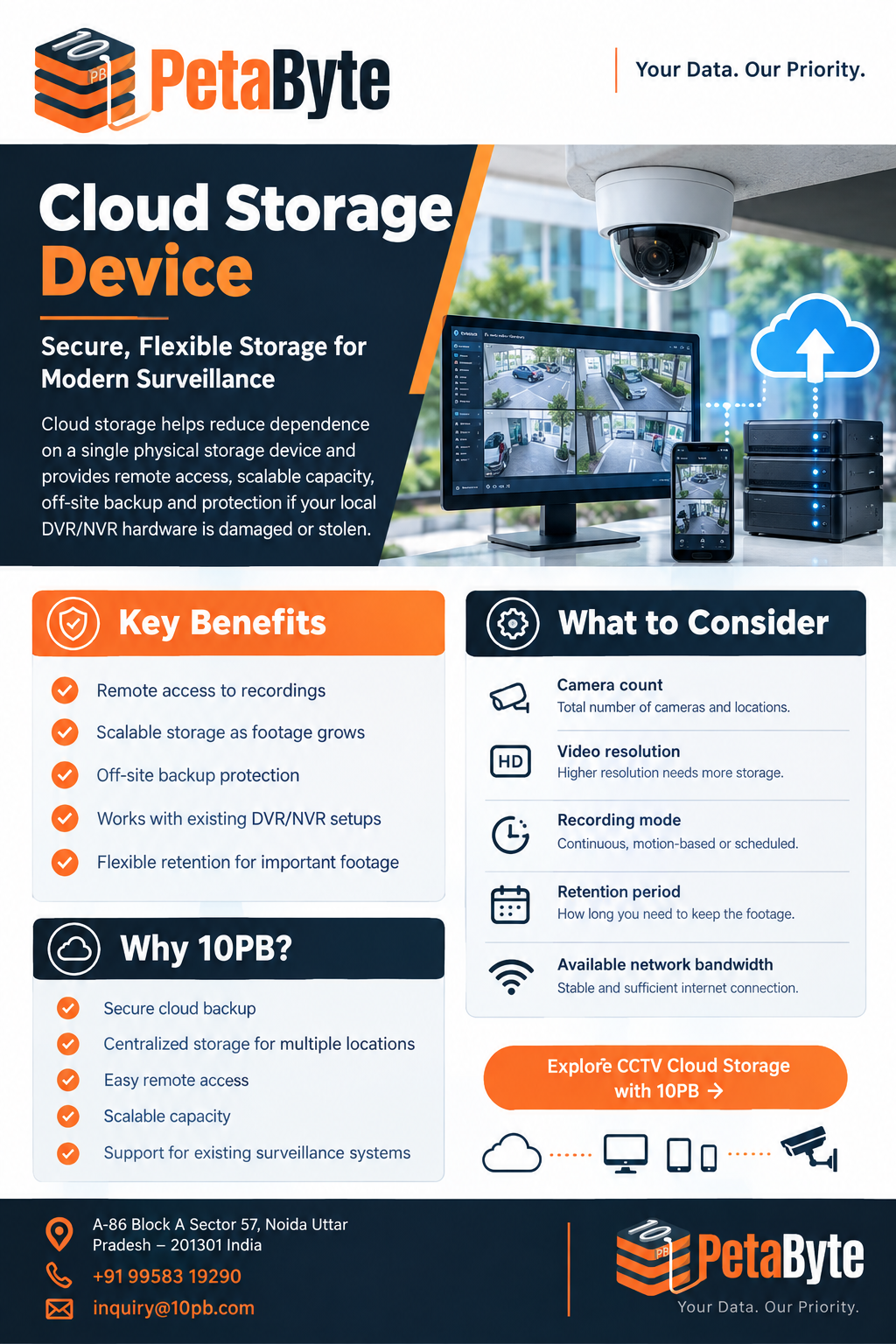
CCTV systems have become an important part of security infrastructure for businesses, warehouses, offices, retail locations, and other facilities. As surveillance networks grow, however, the amount of video data they generate also grows rapidly. Managing this footage efficiently requires more than simply installing larger hard drives.
A cloud storage device approach can provide businesses with an additional way to manage surveillance recordings. Instead of keeping every recording exclusively on equipment at the camera location, organizations can use cloud infrastructure to store selected or continuous CCTV data away from the physical site.
This can make the overall storage strategy more flexible while helping businesses prepare for increasing data volumes.
The Limitations of Local CCTV Storage
Traditional CCTV environments commonly use DVRs, NVRs, internal hard drives, or local servers. These systems are useful because recent footage can often be accessed quickly from the local environment.
However, local storage has physical limitations. Storage drives have finite capacity, and businesses may need to replace or expand hardware when recording requirements increase. Keeping large amounts of historical footage can therefore become increasingly difficult.
There is also a physical dependency. If the equipment holding the recordings experiences a hardware failure or suffers damage, accessing the stored footage can become challenging.
Cloud storage can provide an additional layer that reduces dependence on a single physical storage location.
How Cloud Storage Can Work With CCTV
A cloud storage device strategy does not necessarily require an organization to completely replace its existing CCTV setup.
Businesses can continue using cameras and local recording equipment while transferring relevant footage to cloud storage. Depending on the architecture, cloud storage may be used for backup, long-term retention, or broader centralized storage.
For organizations operating multiple locations, this can also provide a way to bring surveillance data into a more centralized storage environment.
The exact setup depends on the existing camera system, network connectivity, recording configuration, security requirements, and retention policy.
Supporting Longer Retention
Some CCTV footage may need to be retained for longer than the normal local storage cycle.
For example, a local recording system may continuously overwrite older footage once its available capacity is reached. Important recordings that need to be preserved separately can instead be stored in cloud infrastructure.
This can be useful when footage is needed for security investigations, operational reviews, incident analysis, or other business requirements.
By separating long-term retention from everyday local recording, organizations can create a more structured approach to managing surveillance data.
Access From Different Locations
Remote accessibility is another important consideration.
Businesses with several offices or facilities may need authorized personnel to review footage from different locations. A cloud-based storage environment can make centralized access more practical, provided appropriate authentication and permissions are in place.
This can reduce the need to depend on physical access to a particular DVR, NVR, or storage server.
Security remains essential. CCTV footage should only be accessible to authorized users, and organizations should establish appropriate account controls and data protection practices.
Preparing for More Cameras
Surveillance requirements can change over time. A company may start with a small camera network and later add cameras as it expands into new offices, warehouses, production areas, or customer-facing locations.
A fixed local storage setup may require repeated hardware upgrades as the volume of footage increases.
Cloud storage provides a more flexible storage layer that can be planned around changing data requirements. Organizations can evaluate storage needs based on factors such as camera count, recording quality, recording duration, and retention period.
This makes storage planning an ongoing part of CCTV infrastructure rather than a one-time hardware decision.
Using Local and Cloud Storage Together
For many businesses, the choice does not have to be between local storage and cloud storage.
A combination can be useful.
Recent footage can remain on local infrastructure for quick access, while important or older recordings can be copied to cloud storage for additional protection and longer retention.
This type of layered approach can help organizations balance performance, accessibility, storage capacity, and data protection.
The most appropriate configuration will vary depending on the business environment and its surveillance objectives.
What Businesses Should Consider
Before implementing a cloud storage device strategy, businesses should estimate their CCTV data requirements carefully.
Important factors include:
Number of cameras
Video resolution and recording quality
Recording frequency
Retention period
Network bandwidth
Required access locations
Data security requirements
Backup and recovery procedures
Expected future growth
Understanding these factors helps organizations select a storage architecture that matches their actual requirements instead of simply choosing storage based on current capacity.
Building a More Flexible CCTV Storage Environment
CCTV data is valuable only when it can be stored reliably and accessed when it is needed. A cloud storage device approach can help businesses build a more flexible environment by adding scalable, off-site storage to their existing surveillance infrastructure.
For organizations managing growing volumes of video recordings, cloud storage can support longer retention, centralized management, remote accessibility, and an additional layer of protection against local equipment problems.
10PB offers cloud storage solutions for organizations looking to manage large volumes of data and build a more flexible storage environment. Businesses can evaluate their existing CCTV infrastructure and determine how cloud storage can complement their current recording and retention strategy.