Cloud Computing Architecture: Understanding the Building Blocks
A practical overview of the infrastructure components that make modern cloud environments possible.
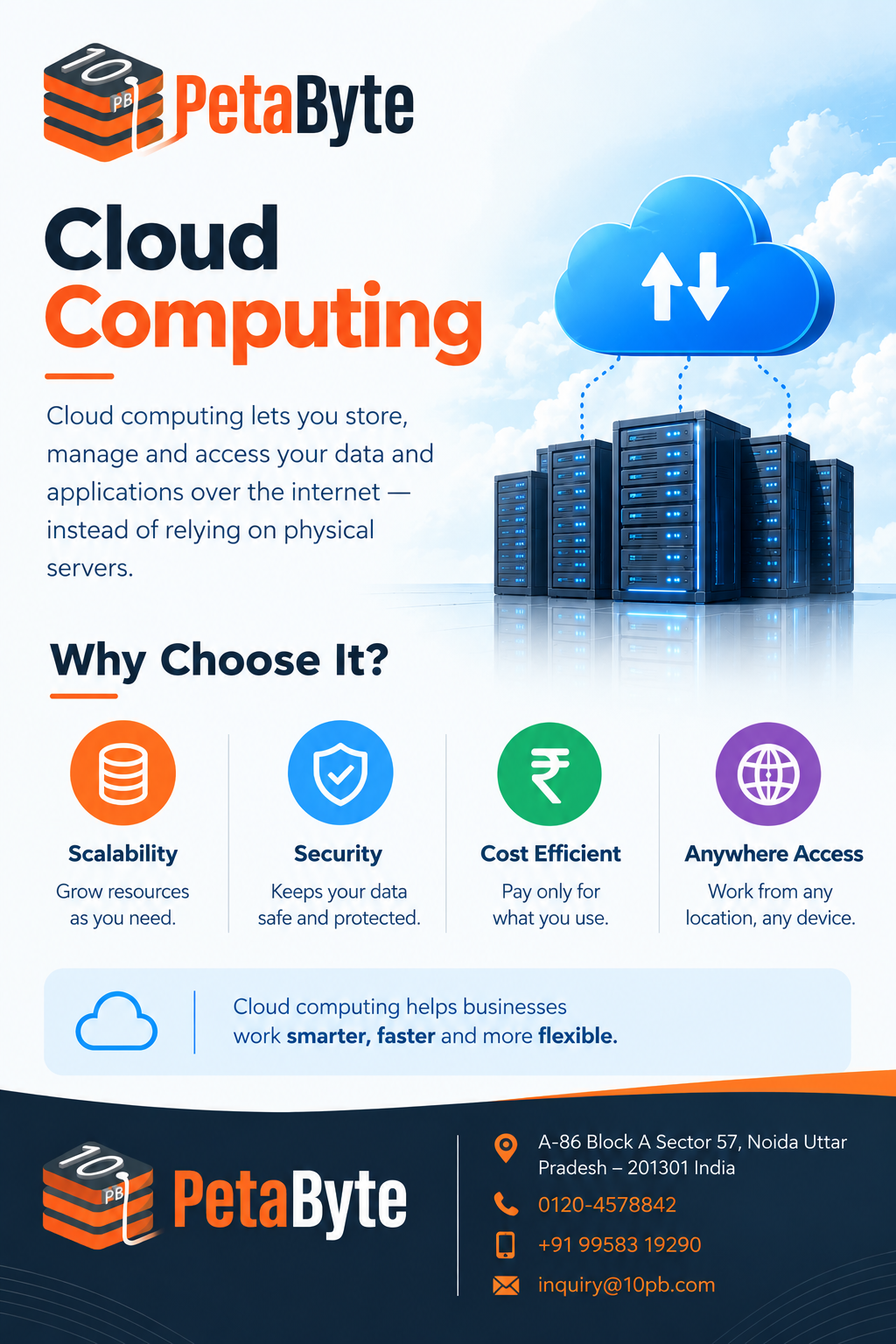
When people hear the term cloud computing, they often think about accessing files or applications over the internet. While that is part of the picture, the technology underneath is much more extensive.
Modern cloud environments combine computing, storage, networking, virtualization, software management, and data-center infrastructure to deliver resources to applications and users.
Understanding these building blocks makes it easier to understand how cloud systems operate.
Compute: The Processing Layer
Every application needs processing power. In a cloud environment, this can be provided through physical servers, virtual machines, containers, or other computing resources.
Instead of assigning one physical machine permanently to a single workload, virtualization can allow a larger physical infrastructure pool to be divided into multiple logical environments.
This approach helps infrastructure resources be allocated according to application requirements.
A lightweight application may require relatively modest resources, while a demanding workload can require significantly more processing capacity.
Storage: Managing Growing Data
Applications generate and consume data constantly. Documents, databases, media files, application logs, backups, and analytics datasets all require storage.
Cloud environments can provide different storage approaches depending on the workload.
Some applications need fast access to frequently used data, while others need large-capacity storage for information that does not require constant access.
Separating storage from individual computing resources can also make infrastructure more flexible. Data can remain available even when the underlying compute environment changes.
Networking: Connecting Everything
Computing and storage resources would not be very useful without reliable communication between them.
Networking connects applications to users, databases to servers, and different infrastructure components to one another.
Cloud networking can include virtual networks, routing, firewalls, load balancing, and other services designed to control how workloads communicate.
A properly designed network is important for both performance and security.
Virtualization and Resource Allocation
Virtualization is one of the technologies that helped make modern cloud infrastructure practical.
It allows physical computing resources to be abstracted into virtual environments. Multiple workloads can operate on the same physical infrastructure while remaining logically separated.
This abstraction makes it possible to allocate resources dynamically rather than treating physical machines as the only unit of infrastructure.
It also provides greater flexibility when deploying and managing applications.
Scalability and Changing Demand
One of the reasons organizations choose cloud infrastructure is the ability to adapt resources to workload requirements.
A business application may have relatively predictable usage during normal periods but experience significantly higher demand during a campaign or seasonal event.
A suitable cloud architecture can provide mechanisms for increasing available resources as requirements change.
However, scalability is not completely automatic. Applications need to be designed appropriately, and resource policies need to be configured and monitored.
Management and Monitoring
A cloud environment can contain many interconnected resources. Without proper management, understanding what is running and how those resources are being used can become difficult.
Monitoring tools can provide information about resource consumption, application performance, network activity, and infrastructure health.
This information helps technical teams identify problems, optimize resource usage, and plan future capacity.
Automation can also reduce repetitive infrastructure tasks and make deployments more consistent.
Security Across the Architecture
Security should not be treated as a separate feature added at the end of a cloud project.
Access controls can determine who is allowed to interact with resources. Network security can restrict communication between systems. Encryption can help protect information during storage and transmission.
Backups and recovery procedures are equally important when workloads contain valuable business information.
The specific security architecture should be designed around the sensitivity and operational requirements of each workload.
Designing for the Workload
There is no universal cloud architecture.
A simple application may require only a small combination of compute, storage, and networking resources. A data-intensive platform may need extensive storage, high-performance computing, multiple databases, and carefully designed network connectivity.
This is why understanding the workload should come before selecting infrastructure.
Technical teams should consider performance, capacity, availability, security, scalability, and operational requirements when designing their environment.
Final Thoughts
Cloud computing is built on several interconnected technologies rather than one individual component. Compute resources provide processing power, storage holds information, networking connects workloads, virtualization improves resource allocation, and management systems help keep the environment efficient.
When these components are designed together, businesses can create infrastructure that responds more effectively to changing digital requirements.
The real strength of cloud architecture comes from this combination: physical infrastructure provides the foundation, while software and virtualization make those resources flexible enough to serve modern workloads.