Lifetime Cloud Storage for Growing Digital Data
Long-term storage designed around accessibility, security, and future data growth.
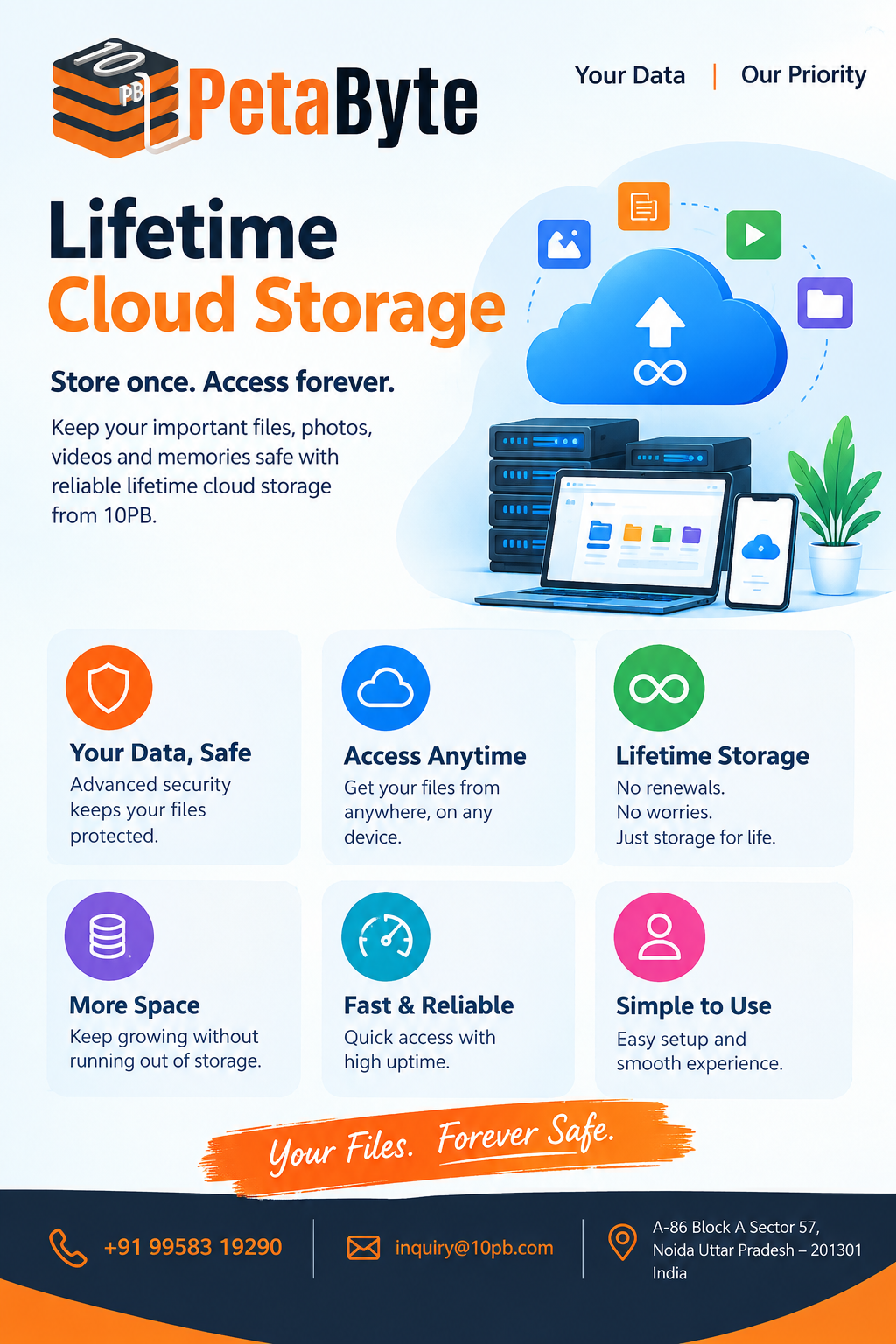
Digital data has become a valuable part of both personal and professional life. Photos, documents, videos, databases, project files, application data, and backups can accumulate quickly. As these collections grow, depending entirely on local hard drives can make storage management more complicated.
Lifetime cloud storage offers a long-term approach to keeping digital information in remote storage infrastructure. Instead of tying important files to one physical computer or drive, users can maintain their information online and access it when required.
The exact meaning of a lifetime storage offering depends on the provider, so users should always review the service terms, storage limits, retention policies, and access conditions before choosing a plan.
Security for Long-Term Data
Keeping information for years requires more than sufficient storage capacity. Security should also be part of the storage strategy.
Encryption can help protect information, while authentication and access controls can help limit who can reach stored files. Backup and versioning features can provide additional protection against accidental deletion or unwanted changes.
10PB highlights features including AES-256 encryption, redundant backups, automatic backup, and file version history for its cloud storage services.
Storage That Can Scale
Data requirements can change over time. A company may initially need cloud storage for documents and backups, then gradually add application data, media files, analytics datasets, and other information.
Scalable cloud infrastructure can make it easier to accommodate this growth without constantly purchasing and managing new physical storage devices.
10PB offers scalable cloud storage solutions and S3-compatible object storage for different business and data-management requirements.
Accessibility and Convenience
Cloud storage can make information available from supported devices and locations without requiring the user to carry a physical drive.
For businesses, this can support distributed teams and simplify access to shared files. For individuals, it can provide a convenient location for personal archives, photographs, documents, and backups.
Remote accessibility becomes particularly useful when information needs to be retrieved away from the primary computer or workplace.
Long-Term Storage and Backup
Cloud storage can also form part of a broader backup strategy. However, storing files in the cloud does not automatically mean every backup requirement has been addressed.
Users should consider backup frequency, version retention, recovery procedures, and redundancy. Businesses should also periodically verify that important information can actually be restored.
A properly designed approach can help reduce the risks associated with hardware failure, accidental deletion, or other local storage problems.
Building a Practical Storage Strategy
Before moving large amounts of information to the cloud, it helps to classify data according to its importance and access requirements. Frequently used files can be organized separately from information primarily kept for long-term retention.
Clear folder structures and appropriate permissions can also make large cloud storage environments easier to manage.
When evaluating lifetime cloud storage, users should therefore consider security, scalability, accessibility, backup capabilities, recovery options, pricing, and the provider's terms rather than focusing on storage capacity alone.
Conclusion
Long-term digital storage requires a reliable combination of accessibility, protection, and flexibility. Lifetime cloud storage can be a useful part of this strategy for users who want to preserve important information while reducing their dependence on individual physical storage devices.
With appropriate security controls, backup practices, scalable infrastructure, and an organized data-management approach, cloud storage can help individuals and businesses manage their digital information more effectively over the long term.